

By James Picerno | The Milwaukee Company
Weak payrolls reflect slower labor-force growth, not necessarily weaker demand
Atlanta and Dallas Fed data point to firmer economic growth
Higher yields are a risk, but economic momentum remains strong
U.S. Treasury yields continue to trade at or near multi-decade highs, and economists cite several reasons, including inflation concerns tied to elevated energy prices and the federal government’s mounting debt burden. Another factor is the so-called crowding-out effect from stronger private-sector credit demand, fueled by AI-related debt issuance to finance the rush to build data centers. The recent pickup in economic growth is likely contributing as well, although that factor may be overlooked.
Last week’s payrolls report, at first glance, appears to challenge the narrative of economic strength. The number of new jobs added in September rose far less than analysts expected, increasing by just 29,000. That’s near the low end of monthly gains posted so far in 2026 and, by historical standards, suggests elevated recession risk.
But weak payroll growth is less alarming than it would have been in the past because the labor force is expanding at a slower rate. With immigration running well below the surge seen in recent years and demographic trends limiting workforce growth, the economy needs fewer new jobs each month to keep unemployment stable. As a result, payroll gains that might once have signaled weakening labor demand can now be consistent with a labor market that remains broadly in balance.
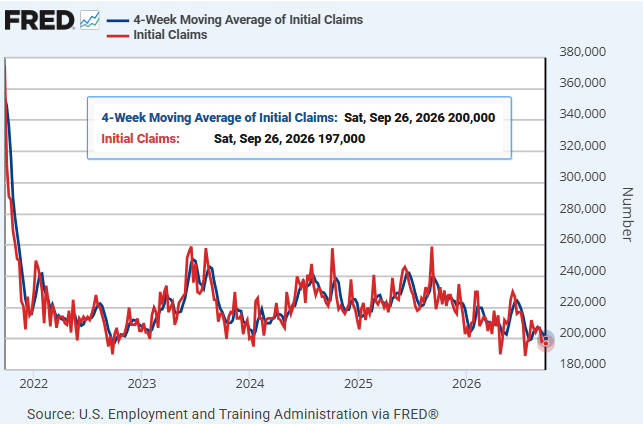
Indeed, the unemployment rate ticked up to 4.2% last month, but that remains close to the lowest level in decades. Weekly jobless claims are also signaling limited labor-market stress. New filings for unemployment benefits dipped below 200,000 in late September, near the lowest levels in decades.
Meanwhile, the economy is showing signs of robust growth. The Atlanta Fed’s nowcast for the third-quarter GDP report due on Oct. 29 projects real (inflation-adjusted) growth of 3.7% (as of Oct. 1) at an annualized rate, a solid improvement from Q2’s 2.2% increase. If correct, the increase will mark the strongest pace in a year.
The Dallas Fed’s Weekly Economic Index (WEI) is also pointing to stronger growth. The latest estimate indicates year-over-year GDP growth of 2.9% as of Sept. 26, comfortably above the 2.2% expansion recorded through Q2.
Viewed through the lens of historical payroll benchmarks, by contrast, the economy appears to be slowing. But some economists argue that labor-supply constraints, rather than weakening demand, may be driving the softer job gains.
By some estimates, the breakeven for payrolls has fallen to as low as 10,000 per month, a fraction of the 150,000-200,000 range that several analysts estimated in the years immediately following the pandemic. By that measure, September’s 29,000 increase in jobs appears sufficient to keep the labor market on stable footing.
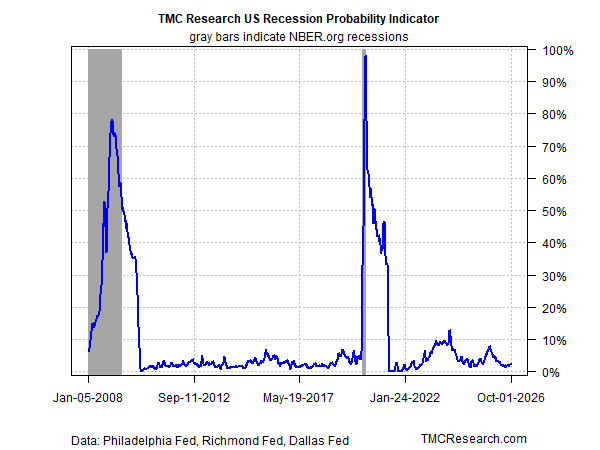
TMC Research’s Recession Probability Indicator (RPI) continues to signal low recession risk for the U.S. Consistent with our previous update in early September, the estimated probability of a downturn remains below 5%, based on data through Oct. 1. (RPI aggregates and processes data from three business-cycle indicators published by regional Federal Reserve banks — see here for details.)
A number of risks could challenge the economy in the months ahead, including the possibility of further increases in interest rates. The U.S. 10-year Treasury yield, a widely watched benchmark, closed at 5.31% on Monday, marking a new multi-decade high.
Higher rates raise borrowing costs for households and businesses, which can weigh on consumer spending, investment, and hiring. They also increase debt-service costs for governments (a non-trivial factor as federal debt balloons) and can tighten financial conditions.
The main concern is that the effects of higher rates build over time and the Federal Reserve decides that it needs to continue raising rates to tame inflation that’s still running well above the central bank’s 2% target. Economic growth has remained resilient so far, but monetary policy works with a lag. If rates push higher and remain elevated for an extended period, the cumulative impact could gradually slow spending and investment, raising the risk of a broader economic slowdown.
For now, the economy appears resilient in the face of higher borrowing costs. In that respect, rising Treasury yields may be signaling a stronger growth outlook as much as concern about inflation and government debt.
