

By James Picerno | The Milwaukee Company
Recent data suggest economic growth remains healthy, but the pace of expansion appears to be moderating from recent highs
A modest slowdown could potentially help ease inflation pressures and reduce the need for additional Fed rate hikes
Recession risk appears to remain low, supporting the possibility of a soft landing characterized by slower but still positive economic growth.
The latest spike in stock market volatility may or may not have implications for the economy, but there are growing signs that the recent acceleration in economic activity is nearing a cyclical high. Recession risk likely remains low, and that doesn’t appear likely to change in the near term, although several indicators suggest that growth momentum is beginning to moderate.
That could ultimately be a positive development for both stocks and the economy if growth slows modestly rather than rolls over. A moderation in demand could help relieve inflation pressures, reducing the need for additional monetary tightening and lowering the risk of a policy-induced slowdown. The ideal outcome would be a transition from above-trend growth to a more sustainable pace of expansion, one that helps inflation to cool without a material increase in recession risk.
For now, it’s still too early to conclude that growth is slowing meaningfully, but several recent data points open the door to that possibility. The November update of the U.S. Composite PMI Output Index, a survey-based proxy for GDP, slipped to a four-month low, suggesting that the economy’s recent growth spurt may be moderating after a strong rebound from a relatively sluggish first half of the year.
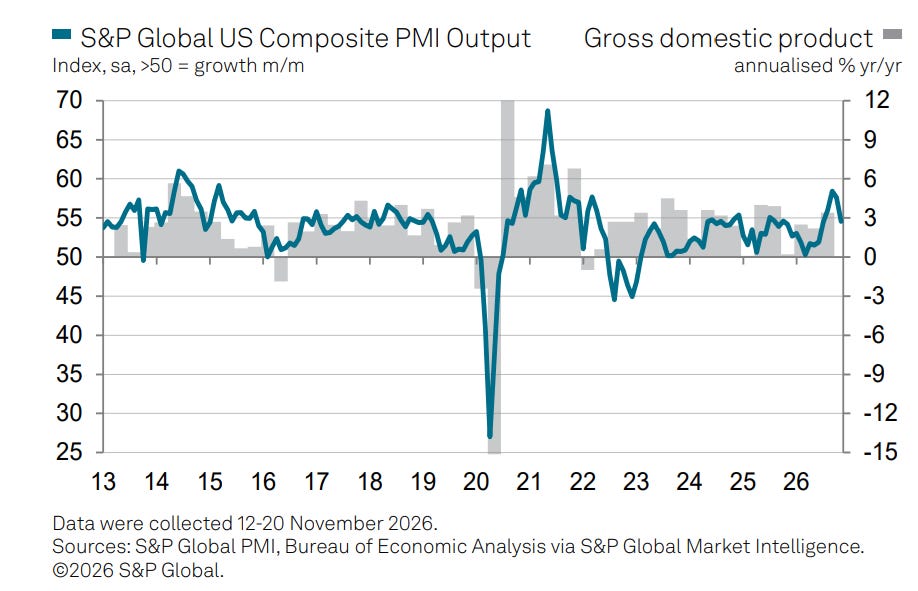
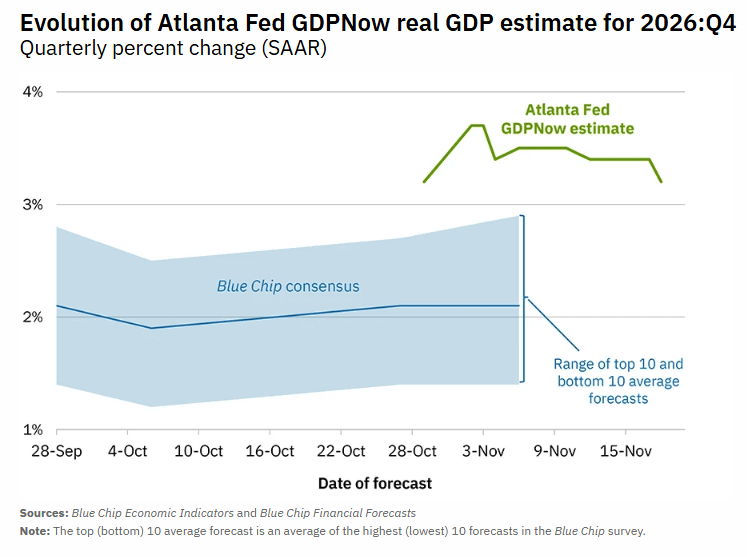
The PMI data still imply a healthy pace of expansion. S&P Global estimates that the survey is consistent with fourth-quarter GDP growth running at roughly a 3% annualized rate. That’s still in line with Q3’s pace and tracks the Atlanta Fed’s GDPNow model’s Q4 estimate, which is currently running at 3.2% (as of Nov. 18), a strong pace by historical standards but somewhat softer than its projections from recent weeks.
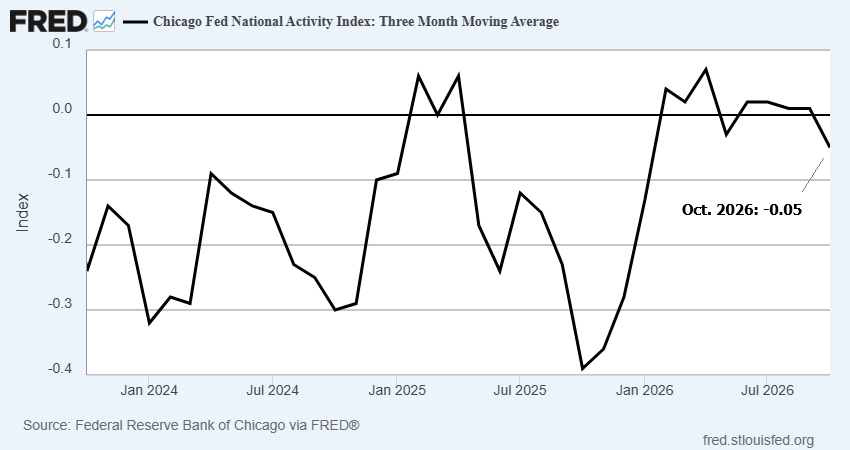
Hard data are also hinting at modest cooling. The Chicago Fed National Activity Index, a broad measure of economic activity based on 85 indicators, saw its three-month average slip to -0.05 in October, the lowest reading since January. The slightly negative print indicates growth running fractionally below its historical trend. Meantime, the index’s three-month average remains far above the -0.7 level that marks recessionary conditions.
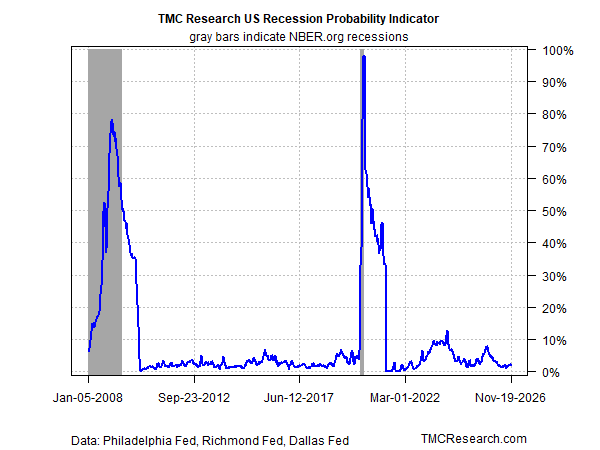
TMC Research’s Recession Probability Indicator (RPI) tells a similar story. Based on data through Nov. 19, the model continues to signal low recession risk even as some measures of economic momentum show signs of easing. (RPI aggregates and processes data from three business-cycle indicators published by regional Federal Reserve banks. See here for details. (The RPI is a proprietary, model-based indicator; its estimates are subject to limitations and may not always accurately predict future economic conditions.)
Taken together, the evidence suggests that the economy may be shifting from acceleration to moderation. Growth remains healthy, labor market conditions are still supportive, and recession risk appears low, but the pace of activity no longer appears to be strengthening at the same rate seen earlier in the quarter.
If that trend continues, it would likely represent a relatively favorable middle ground for investors. Economic growth would remain strong enough to sustain the expansion while cooling just enough to ease some of the inflation pressures that have kept the Federal Reserve on alert. Such an outcome would not eliminate inflation concerns, but it could reduce the need for additional rate hikes and improve the odds of a softer, sustainable expansion.
