

By James Picerno | The Milwaukee Company
Recent economic reports continue to favor growth, potentially supporting a reduced-risk outlook for the near term
Job openings, factory orders, and consumer spending are all showing renewed strength, signaling firmer economic momentum
The stronger growth backdrop could complicate the inflation outlook and reinforce expectations for additional Fed rate hikes
As markets assess the implications of Democrats’ victory in Tuesday’s mid-term elections, investors are also weighing economic data that continues to point to a resilient expansion. Recent reports reinforce the view that the U.S. economy remains on solid footing, with little sign of an imminent recession. While concerns about slowing activity, tighter financial conditions, and lingering inflation pressures remain part of the debate, the latest indicators suggest that economic momentum continues to favor growth in the near term.
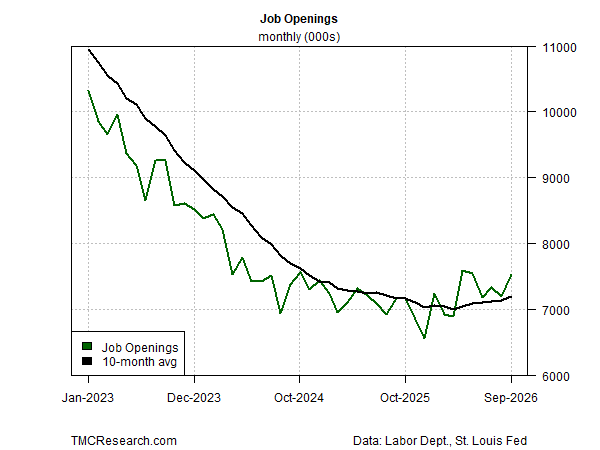
Several measures of economic activity that had previously appeared vulnerable, including manufacturing and labor demand, are showing signs of renewed strength. Job openings rose to 7.523 million in September, suggesting that demand for workers is stabilizing after a prolonged cooling trend. Notably, the 10-month average of job openings has begun trending higher, marking the first sustained improvement in several years.
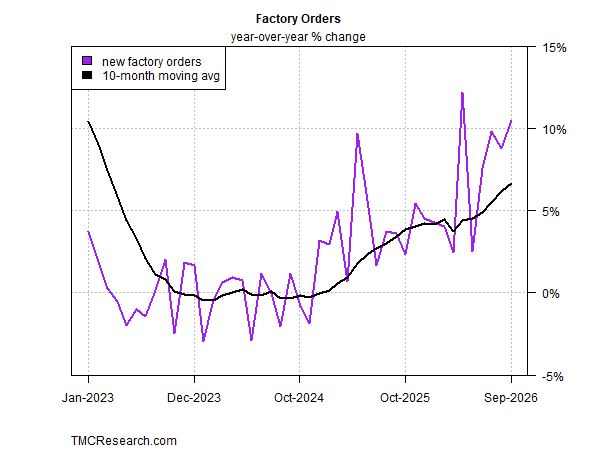
Manufacturing data have also strengthened. Factory orders rose 1.8% in September, boosting the 10-month trend in the year-over-year change in new orders to its highest level since 2023. Meanwhile, a business survey for October reports ongoing growth in production, new orders, and order backlogs. suggesting that the recent rebound in demand for manufactured goods may have further room to run.
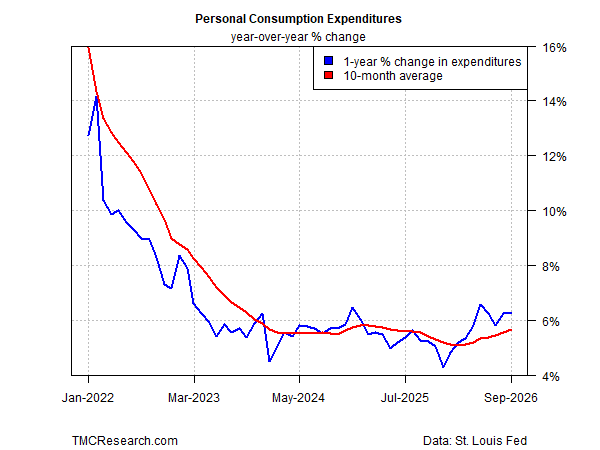
Consumer spending, the primary engine of U.S. economic activity, is also showing renewed strength. The 10-month average of the year-over-year change in personal consumption expenditures strengthened in September, marking the seventh consecutive month of improvement in the trend.
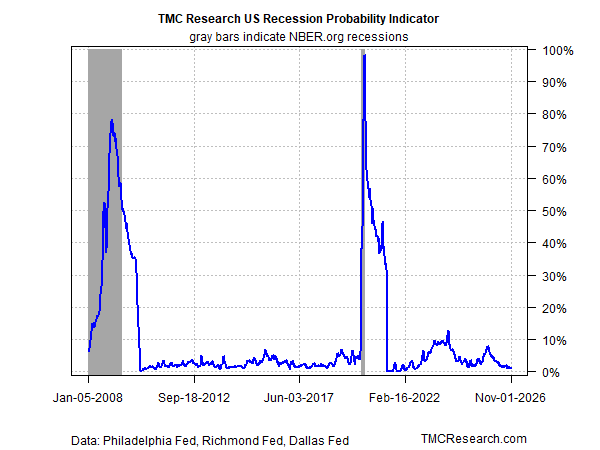
Taken together, the data suggest that economic activity will maintain a growth bias in the fourth quarter, leaving recession risk relatively low for the near term. Consistent with that assessment, TMC Research's Recession Probability Indicator (RPI) continues to signal low recession risk for the U.S., estimating that the odds of a downturn remained subdued. (RPI aggregates and processes data from three business-cycle indicators published by regional Federal Reserve banks. See here for details. The RPI is a proprietary, model-based indicator; its estimates are subject to limitations and may not always accurately predict future economic conditions.)
The resilient economic backdrop also has implications for inflation. Sustained strength in labor demand, manufacturing activity, and consumer spending could make it more difficult for inflation to return quickly to the Federal Reserve's 2% target.
If incoming data continue to reflect above-trend growth, expectations for a rapid decline in inflation may need to be tempered. As a result, the Fed may have more work to do. Fed funds futures are already pricing in high odds of another rate hike next month, a view that has gained credibility as the recent flow of economic data continues to point to underlying economic resilience.
