

By James Picerno | The Milwaukee Company
Consumer inflation cools again, but the bond market isn’t impressed
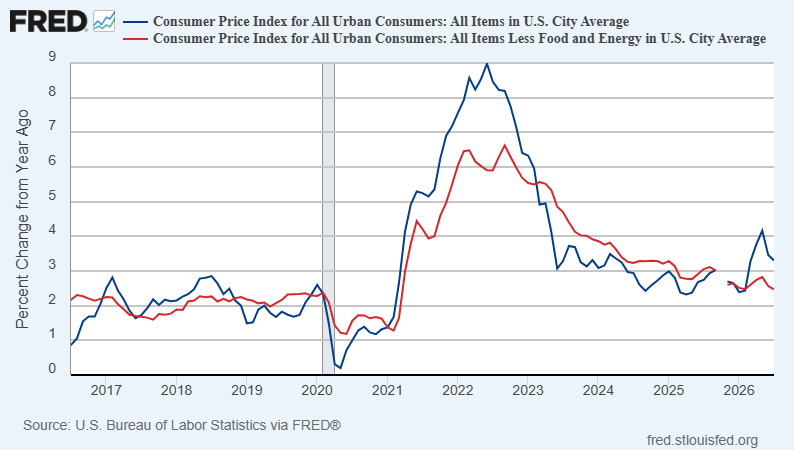
Energy prices continue to ease, yet headline inflation stays above 3%
The Fed’s next move may determine if markets shift their inflation outlook
Consumer inflation ticked lower in July, providing the Federal Reserve with a bit more support for keeping interest rates steady at the upcoming policy meeting in September.
The government’s latest report suggests that the war‑driven surge of inflation is reversing. The drop in the energy component of the Consumer Price Index (CPI) was again a significant source of moderation. But the disinflationary impulse over the past two months remains gradual overall, while the outlook is still uncertain due to the Iran war and ambiguity about prospects for a return to normal for energy exports from the Gulf.
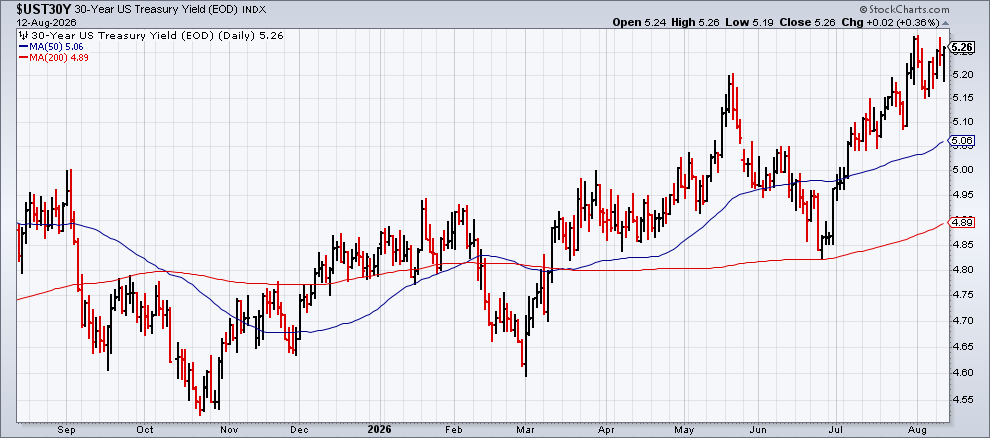
Despite the marginally lower inflation data, the news doesn’t materially change the outlook since the June CPI report. Perhaps that explains why the bond market isn’t particularly impressed with the modestly softer inflation numbers—at least not yet. Meanwhile, Fed funds futures are still pricing in one or more rate hikes by the end of the year.
The market’s reservations aside, a second month of slightly lower year‑over‑year gains for headline and core CPI suggests that the war‑related rise in inflation has peaked and is moving closer to the pre-war trend. Assuming the Middle East crisis remains relatively tame, further declines in inflation are plausible in the months ahead. Whether the bond market is persuaded that the risk has passed, however, remains a work in progress.
The U.S. 30‑year Treasury yield rose in trading yesterday following the release of the CPI data. The long bond, the most inflation‑sensitive maturity, was essentially increased to 5.26%, close to a two‑decade high. The benchmark 10‑year rate also advanced, near its highest level since early 2025.
Fed funds futures are now pricing in a 68% probability that the Fed will leave its target rate unchanged at the September 16 FOMC meeting. For the October and December meetings, by contrast, this market is still anticipating one or two hikes.
Even after a second month of disinflation, TMC Research’s Fed Funds Model continues to estimate that monetary policy has recently shifted to a dovish bias. The model uses several economic and financial factors to estimate a neutral rate. The current profile suggests that a quarter‑point increase is appropriate to remove the passive dovish pivot that emerged after the model’s neutral‑rate estimate rose in late May while the target rate was unchanged.
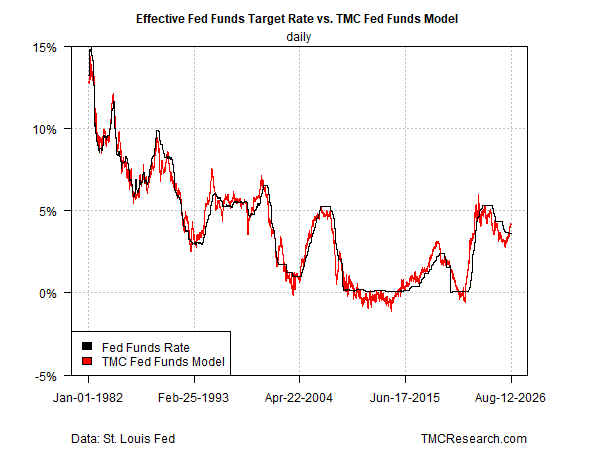
The Fed’s policymakers have been debating whether inflation will ease without tightening monetary policy. At the July 29 meeting, three of the twelve voting members of the Federal Open Market Committee voted for a rate hike, marking a rare dissent from the majority’s decision to leave rates steady.
The July CPI report offers a bit more support for standing pat, but the debate will likely continue as long as the Iran crisis simmers and headline inflation runs above 3%, which is well above the Fed’s 2% target—a gap that’s prevailed for more than five years.
Several other variables could influence upcoming decisions. One is the strength of the economy, the labor market in particular. U.S. payrolls posted an unexpected drop in July due to cuts in government jobs, although companies continued to hire, albeit at a slow pace. The news boosted confidence that the Fed would forgo rate hikes next month.
Another question is whether the bond market is paying attention to the ongoing rise in the federal budget deficit, which some analysts predict could be a factor that keeps inflation and interest rates higher than they otherwise would be if the fiscal gap were stable or narrowing.
Whatever the logic driving yields, the bond market has yet to embrace the view that inflation risk has peaked and is now on a sustainable course to ease. A key variable that will shape market expectations is the Fed’s upcoming policy decisions, which remain central to determining whether investors should anticipate a prolonged pause in policy, renewed tightening, or a shift toward eventual rate cuts.
